
Hidden roof storm damage in Central Florida often starts small and goes unnoticed. After a tropical system, high winds, or a heavy downpour moves through Orange, Seminole, Brevard, Volusia, Stewart, or Indian River County, a roof can look untouched from the driveway while real damage sits just out of view. The Insurance Institute for Business & Home Safety reports over 65% of roof replacements stem from preventable, hidden issues. Granule loss in gutters, curled shingles, or subtle attic moisture are common signs, and each one tends to worsen quietly until it shows up as a leak or a sagging ceiling. A professional inspection catches these problems before they escalate into costly repairs, giving homeowners a clear picture of their roof’s condition and protecting the value of the home.
Key Takeaways
- Over 65% of roof replacements trace back to damage that started as a minor, preventable issue.
- Granule loss in gutters exposes the asphalt matting and accelerates wear from Florida’s sun.
- Compromised roof flashing around vents, valleys, and chimneys creates direct entry points for water.
- Attic inspections reveal damp insulation, musty odors, and rusted nails that signal moisture intrusion.
Why does my roof look fine after a storm?
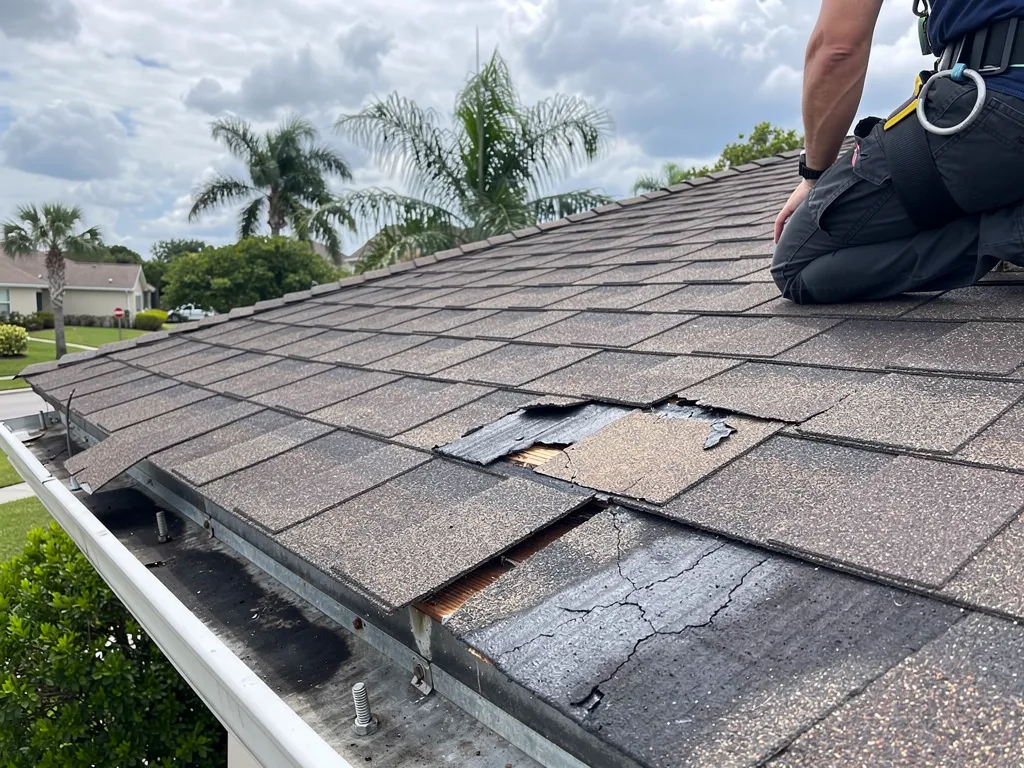
A roof can sustain serious damage while appearing completely intact from the ground. Storm damage is often hidden, and issues may not appear until weeks or months later. Central Florida homeowners who skip a post-storm roof inspection risk discovering problems only after leaks begin.
Strong winds loosen roofing materials or break the seals that keep water out, even if the roof still looks normal. These small failures create entry points for moisture. Over time, that moisture causes wood rot, mold, and structural deterioration.
What kind of damage stays invisible after a storm?
- Loose shingles that remain in place but no longer seal against wind-driven rain
- Broken adhesive strips under shingles, invisible from ground level
- Compromised flashing around vents, chimneys, and skylights
- Small punctures from flying debris that do not show from below
How long before hidden damage becomes obvious?
Hidden problems often surface weeks or months after the storm. A homeowner may notice roof leaks after heavy rain long after the original weather event, once a loosened seal or cracked flashing has had time to let moisture work its way into the decking. By then, the repair scope has grown from a simple patch to a full section of decking and insulation replacement. Early detection prevents major repairs, which is why a professional assessment matters soon after any significant wind or rain event. Homeowners evaluating whether to repair or replace their roof benefit from understanding how hidden damage progresses, since the right call often depends on catching issues before they compound.
What are the hidden signs of roof damage?
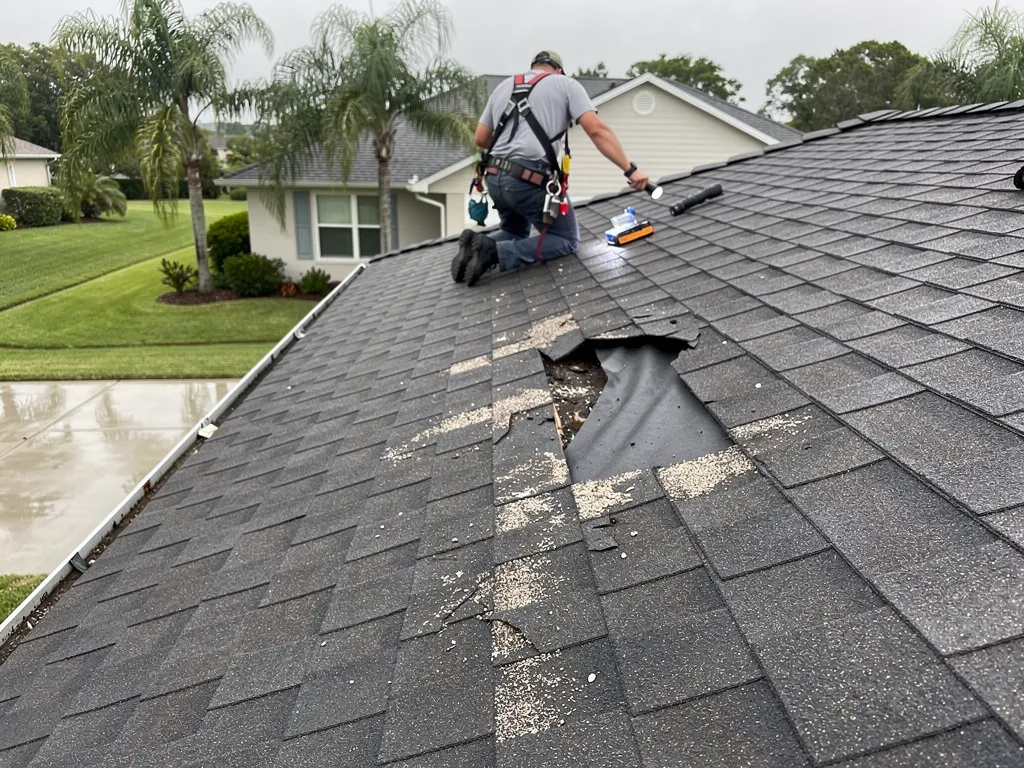
Hidden roof damage often starts small and stays invisible from the ground. A post-storm roof inspection reveals problems that homeowners miss until leaks or structural decay set in. The Insurance Institute for Business & Home Safety reports that more than 65% of roof replacements trace back to damage that began as a minor, preventable issue.
What does wind damage to shingles look like up close?
Wind damage to shingle surfaces appears as lifted edges, creased tabs, or completely missing pieces. Strong gusts break the adhesive seal that locks shingles together. Once that seal fails, water slips underneath and attacks the decking. A central florida roofing contractor spots these failures during a close-up inspection, long before a ceiling stain appears.
How does granule loss lead to bigger problems?
Granule loss in gutters exposes the asphalt matting and accelerates wear. Those granules shield the roof from ultraviolet rays and impact. Without them, shingles bake in the Florida sun, turn brittle, and crack. Homeowners who notice dark, sandy grit washing out of downspouts after heavy rain should treat it as an early warning.
Why is soft roof decking a critical red flag?
Soft or spongy roof decking signals compromised structure underneath. Moisture seeps through failed flashing or cracked shingles and rots the plywood over time, often without any visible sign on the surface above. Walking across a roof that feels springy underfoot indicates advanced decay, and in many cases the damage has already spread beyond a single board. At that stage, emergency roof repair becomes urgent to prevent a partial collapse, and homeowners should avoid walking on the affected area until a professional can assess how far the rot has spread.
Where does flashing failure let water in?
Flashing seals the joints where the roof plane meets a vertical surface. When wind bends it or caulk dries out, roof leaks after heavy rain follow quickly. A thorough storm damage roof repair protocol always checks these transitions first.
Homeowners who delay inspection after a storm risk losing thousands to rot and mold. A guide to Roof Repair & Replacement for DeBary homeowners outlines the full inspection process. Roof damage after a storm worsens silently, but trained eyes catch the clues before a small flaw becomes a full replacement.
How can I check for damage inside my home?
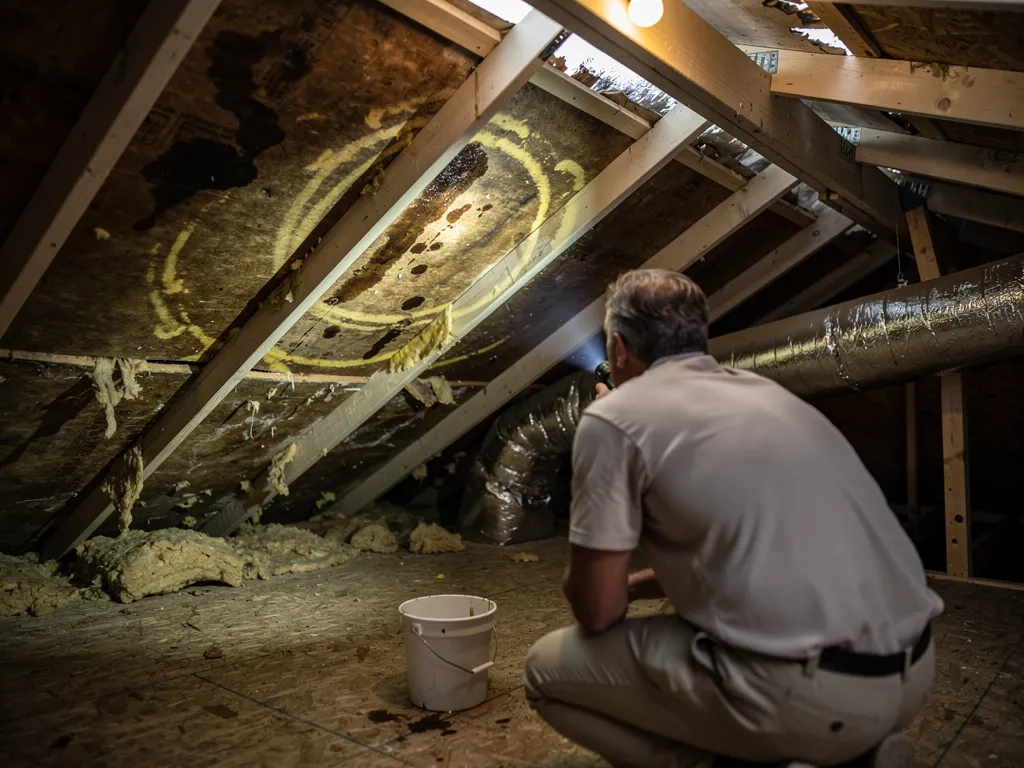
Interior signs of roof damage after a storm often appear before exterior clues. Homeowners who inspect attics and ceilings promptly catch problems while repairs remain manageable. The Insurance Institute for Business & Home Safety reports that more than 65% of roof replacements trace back to damage that started small and was entirely preventable.
What should homeowners look for in the attic?
Attic inspections reveal damp insulation, musty odors, and rusted nails. These indicators signal moisture intrusion that compromises the roof deck. In Central Florida’s humid climate, trapped moisture accelerates rot, encourages mold growth, and weakens structural integrity. Left unchecked, these conditions spread silently for weeks before visible leaks appear downstairs.
How do ceilings show hidden roof trouble?
Ceiling discoloration and hairline drywall stains point to water intrusion from above. Stains often start faint and expand after subsequent rains. A post-storm roof inspection by a qualified central florida roofing contractor identifies the source before drywall replacement becomes necessary. Professional assessments also provide documentation homeowners need for insurance claims.
FAQ
What kind of damage stays invisible after a storm?
Loose shingles, broken adhesive strips, compromised flashing around vents and chimneys, and small punctures from flying debris stay invisible from ground level.
How long before hidden damage becomes obvious?
Hidden problems often surface weeks or months after the storm, when a homeowner notices roof leaks after heavy rain.
Conclusion
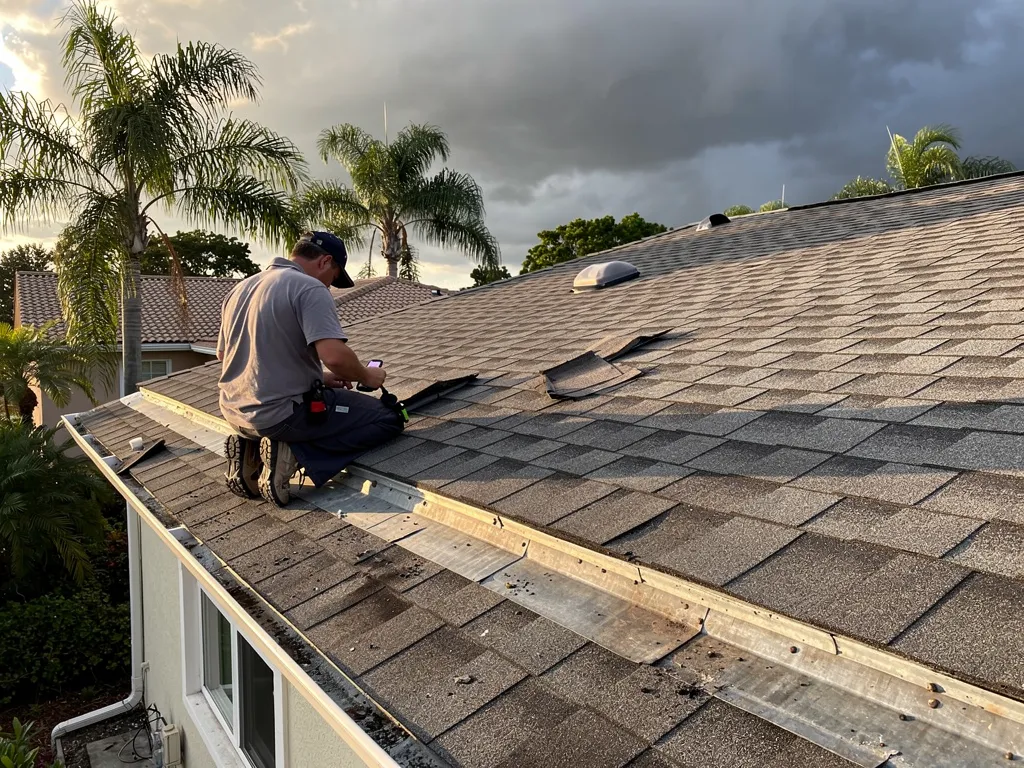
Hidden damage does not announce itself, and waiting for a leak guarantees a larger repair bill. A professional inspection catches loose shingles, failed seals, and compromised flashing before moisture rots the decking or mold spreads through the attic. Schedule that inspection now, while the problem remains small and the fix stays affordable.