Florida commercial roofing demands systems built for hurricane resistance, energy efficiency, and long-term durability. ROC Roofing, a Central Florida contractor with over 20 years of experience, installs TPO, metal, and tile roofs designed to protect business properties. Commercial roofing Florida solutions meet strict Florida building codes while reducing operational costs.
Key Takeaways
- Florida commercial roofing requires systems engineered for hurricane resistance, energy efficiency, and long-term durability.
- The Florida Building Code mandates high-wind resistance and impact-rated assemblies for all commercial roofing systems.
- TPO single-ply membrane leads the energy-efficient category with its reflective white surface reducing cooling loads.
- A commercial roof inspection performed by an experienced local team catches vulnerabilities that out-of-state crews frequently overlook.
What makes commercial roofing in Florida different?
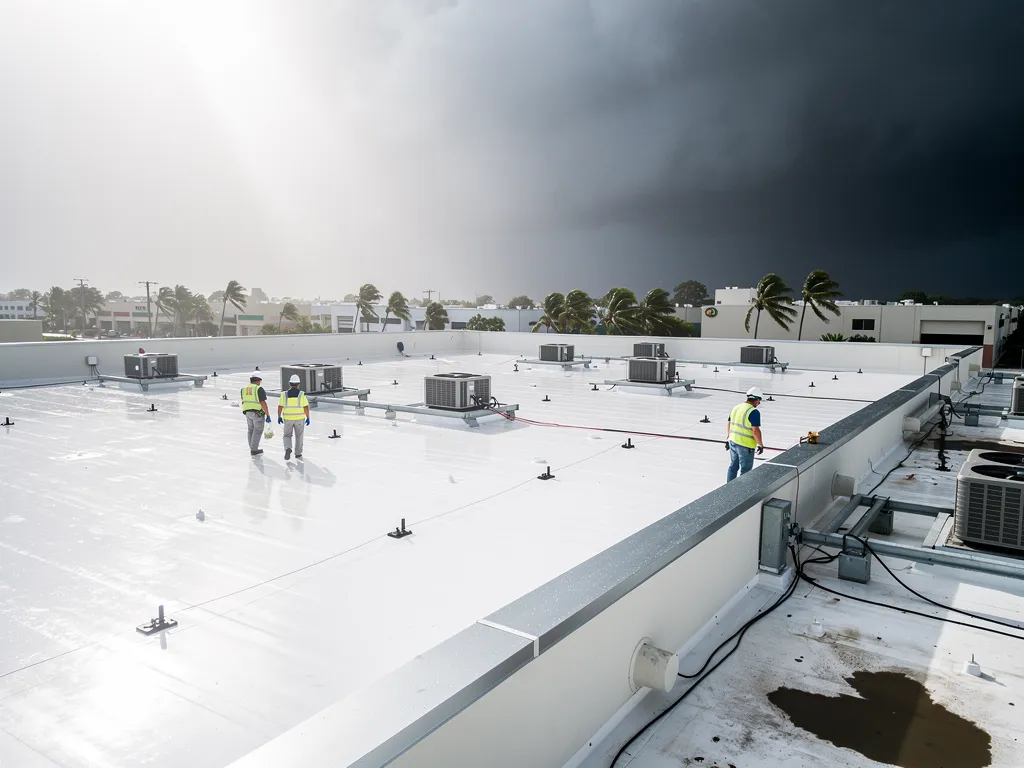
Florida’s climate imposes relentless stress on commercial buildings. Intense heat, torrential rain, and hurricane-force winds demand roofing systems engineered specifically for survival. A standard installation from another region fails quickly here. The state’s unique conditions require materials, installation methods, and maintenance schedules that account for constant UV exposure and sudden, violent storms.
Commercial roofing contractors in Florida must navigate strict building codes. The Florida Building Code mandates high-wind resistance and impact-rated assemblies. Baker Roofing Company of Orlando notes that its teams hold Florida GC licensure and know local building codes thoroughly. Compliance is not optional. A roof that meets these standards protects the structure and keeps the business operational when a storm hits.
Why does Florida’s weather shorten a commercial roof’s lifespan?
Heat and moisture work together to degrade roofing materials faster than in temperate zones. UV radiation breaks down membranes. Ponding water from heavy rains accelerates deterioration. Without a system built for these conditions, a commercial roof replacement becomes necessary years ahead of schedule.
What happens when a commercial roof fails during a storm?
Water intrusion halts operations immediately. Inventory, equipment, and interior finishes suffer damage. The business loses revenue for every hour the doors stay closed. A resilient roof prevents this cascade of losses. ROC Roofing installs systems designed to protect and enhance business property, using materials that withstand Florida’s heat, rain, and storms. For property managers evaluating their options, the company’s commercial roofing services cover TPO, metal, and flat roof installations built for local conditions.
Which commercial roofing system is best for Florida?
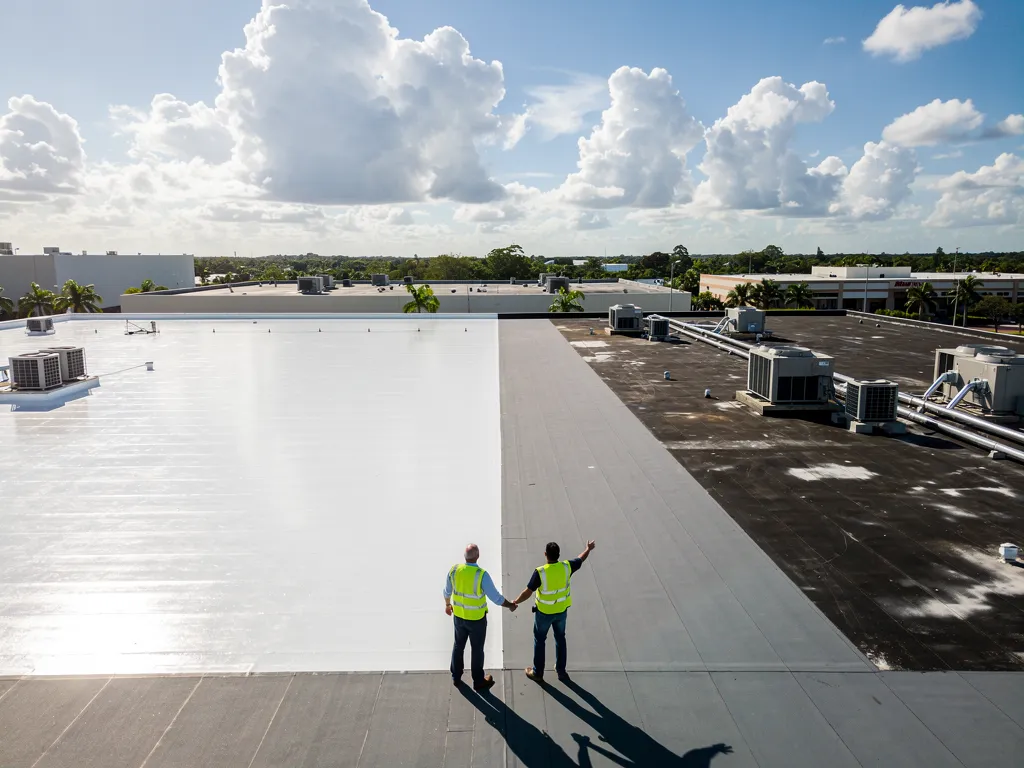
No single system wins for every Florida commercial building. The right choice balances budget, building structure, and storm resilience. A facility manager loses thousands in premature replacement costs when the wrong membrane traps heat or fails under hurricane winds.
Commercial roofing contractors in Florida typically recommend three proven systems for the state’s punishing climate. TPO single-ply membrane dominates the energy-efficient category. Its reflective white surface cuts cooling loads during Florida’s long summers. Modified bitumen delivers multi-layer waterproofing that stands up to ponding water on low-slope roofs. For longevity, standing seam metal roofing resists 150-mph wind uplift and sheds debris without tearing.
How does TPO compare to modified bitumen for Florida flat roofs?
TPO costs less upfront and reflects heat better. Modified bitumen offers superior puncture resistance and easier flat roof repair when damage occurs, since individual layers can often be patched without disturbing the whole system. Both systems perform well on the low-slope commercial roofs common across Florida, and the right pick often comes down to a building’s specific traffic, equipment load, and drainage pattern.
Is metal roofing worth the investment for commercial buildings?
Metal roofing delivers decades of service with minimal maintenance. The interlocking seam design prevents wind-driven rain intrusion during tropical storms, a common failure point for lower-grade systems. Higher material costs offset over decades through reduced repair frequency and lower insurance premiums, making metal a sound long-term investment for owners planning to hold a property for years to come.
How do I choose a commercial roofing contractor in Florida?
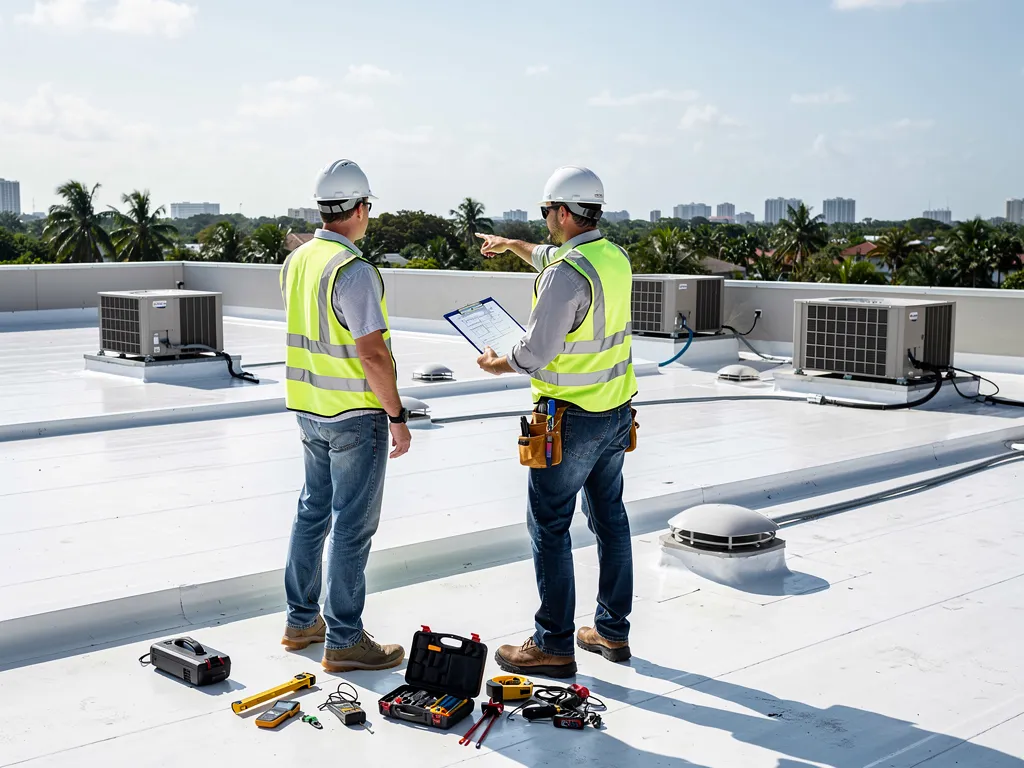
Selecting a commercial roofing contractor in Florida requires verifying local experience, proper licensure, and a documented history of quality workmanship. A wrong choice leads to code violations, premature roof failure, and operational disruptions that cost far more than the initial project savings.
What credentials should a Florida commercial roofing contractor hold?
Florida’s building codes and hurricane exposure make credentials non-negotiable. A qualified contractor holds state-required licensure and carries both liability insurance and workers’ compensation coverage. ROC Roofing operates as a locally owned and operated company with over 20 years of experience serving Central Florida, ensuring familiarity with regional code requirements and weather demands that out-of-state firms often miss.
How do I evaluate a contractor’s track record?
Look beyond marketing claims. Request a portfolio of completed commercial roof installation and commercial roof replacement projects similar in scope to the property in question. Verify references from facility managers who can speak to timeliness, cleanup practices, and post-installation responsiveness. A contractor offering both emergency storm damage repair and regular maintenance demonstrates the full-service capability needed for Florida’s volatile climate, rather than a one-time crew that disappears after the invoice is paid.
Why does local experience matter for commercial roofing?
Local contractors understand Florida’s specific challenges: high winds, intense UV exposure, and heavy seasonal rainfall. This knowledge shapes material recommendations and installation techniques. A commercial roof inspection performed by an experienced local team catches vulnerabilities that out-of-state crews overlook. Timely commercial roof repair identified during these inspections prevents minor leaks from escalating into full commercial roof replacement scenarios. For flat roof repair on low-slope commercial buildings, local expertise proves especially critical, as improper drainage leads to ponding water and structural damage that worsens with every passing storm season.
FAQ
What makes commercial roofing in Florida different?
Florida’s climate demands systems engineered for hurricane resistance, energy efficiency, and long-term durability, and the Florida Building Code mandates high-wind resistance and impact-rated assemblies.
Conclusion
Florida’s climate demands a commercial roof built for survival, not just shelter. Property managers who invest in a system engineered for local conditions and installed by a contractor with proven local experience protect their operations from costly storm disruptions and premature failure. The right choice today prevents a cascade of losses tomorrow. Schedule a professional inspection to evaluate your current system and plan for the long term.